
A container of brass pipe fittings can look identical on paper whether it came from a foundry, a warehouse or a trading office. The differences show up three months later, when a batch leaks at the threads, the lead content fails a lab test, or nobody picks up the phone to explain why.
This guide breaks down how manufacturers, traders and exporters actually differ in India, what each model costs you and protects you from, and which checks reveal who you are really dealing with.
For most overseas buyers, the safest choice is a manufacturer that also exports directly, because it controls casting, machining and testing under one roof. Traders can work for small, mixed orders, but they add a margin and a layer between you and the factory floor. Always verify who physically makes the product.
Three Types of Sellers, and What Each One Actually Does
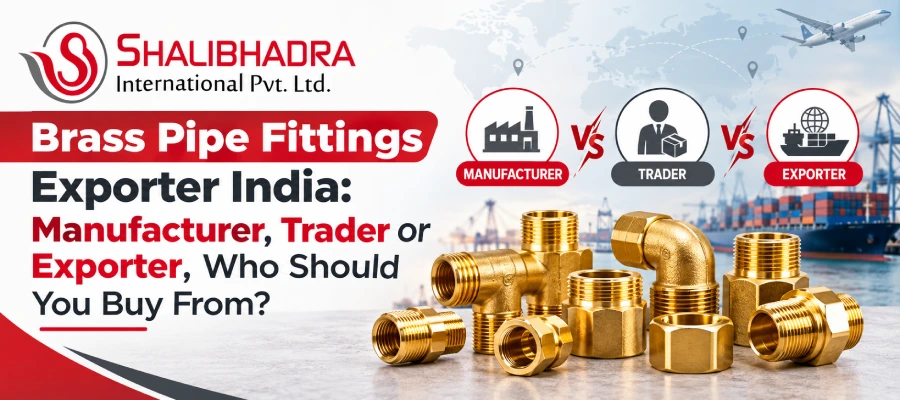
The terms get used interchangeably in Indian trade listings, but they describe three different businesses. A manufacturer owns the foundry, forging press or machining line. A trader buys finished fittings from several factories and resells them with a markup. An exporter handles the shipping paperwork, customs filing and overseas logistics, and may be either of the other two.
That last point causes most of the confusion. A brass pipe fittings exporter in India holds an Importer-Exporter Code (IEC) issued by the Directorate General of Foreign Trade, and anyone can obtain one in a few days. Holding the code says nothing about whether the company has a single machine.
Many Indian firms sit in two categories at once. A Jamnagar factory that casts and machines its own elbows, tees and couplings, then ships them abroad itself, is both manufacturer and exporter. A trading house in Mumbai that sources from six factories and ships under its own name is an exporter only.
Where Brass Pipe Fittings Come From in India
Most Indian brass fittings come from a handful of industrial clusters, each with its own strengths. Jamnagar in Gujarat is the best known for turned and machined brass parts. Jagadhri in Haryana is famous for utensils and metal goods, and its foundries also pour plumbing castings. Moradabad leans toward decorative work, while Rajkot is strong in engineering goods and tooling.
A buyer looking for a brass pipe fittings manufacturer India wide will usually find that the cluster matters less than the individual factory. Two units on the same street can differ sharply in alloy discipline, inspection practice and export experience.
Cluster location still affects logistics. Jamnagar and Rajkot sit within reach of Kandla and Mundra ports in Gujarat, while Haryana and Uttar Pradesh buyers typically route through Mundra or Nhava Sheva near Mumbai, adding inland freight days to the schedule.
What Does Buying Direct from a Manufacturer Give You?
Buying direct gives you control over the three things that decide whether fittings pass inspection: alloy, dimensions and testing. A factory that pours its own castings can tell you the exact brass grade, trace a batch to a heat number and adjust tooling when a thread runs out of tolerance.
Pricing is usually cleaner as well. There is no middle margin, which commonly runs 8 to 15 percent in trading arrangements, and the factory can quote from its own rod or ingot cost. Buyers also gain a technical contact who can discuss thread standards such as BSPT, BSPP or NPT without relaying questions to someone else.
The trade-off is flexibility. A manufacturer often sets minimum order quantities by item, so mixing fifty sizes across a small container can be harder than it sounds. Custom patterns also need tooling, and that takes weeks.
What Does a Trader Offer, and Where Does It Go Wrong?
A good trader solves a real problem: variety. If you need a mixed container of fittings, valves and a few unrelated hardware items, a trader can consolidate products from several suppliers and manage one invoice. That convenience suits small importers and first-time buyers testing the Indian market.
The risks are traceability and consistency. A trader may switch factories between orders to chase a lower price, and the fittings from the second batch may not match the first in weight, finish or lead content. Because the trader does not control production, a quality complaint travels through a chain of phone calls before anyone with a machine hears about it.
Some traders are excellent and openly say so. The warning sign is a company that claims to be a factory but cannot show one.
How Do You Verify a Brass Pipe Fittings Supplier in India?
Verification starts with proof that the company makes what it sells. Ask for a factory address, then request a live video walk-through or a visit, and look for casting or forging equipment, CNC machines and a testing area. Cross-check the GST registration and IEC against government portals, which takes minutes.
The table below shows the checks that separate the three seller types fastest.
| Check | Manufacturer | Trader | Exporter-only |
| Owns foundry or machines | Yes | No | Usually no |
| Can name the brass alloy per batch | Yes | Sometimes | Rarely |
| Shares in-house inspection records | Yes | Via supplier | Via supplier |
| Handles tooling and custom patterns | Yes | Outsourced | Outsourced |
| Holds IEC and export paperwork | Usually | Usually | Always |
Beyond the walk-through, order a paid sample lot. Test thread fit with go/no-go gauges, run a hydrostatic pressure test, and send a piece to a lab for alloy composition. A reliable supplier will welcome this, since it protects both sides.
Quality Standards and Documents to Demand
The right paperwork tells you more than any sales pitch. For plumbing fittings, ask which standards the products meet, such as ASME B1.20.1 for NPT threads, ISO 228 for BSPP, or EN 1254 for copper and copper alloy fittings sold in Europe.
Alloy grade needs equal attention. Forged and cast fittings often use CW617N (CuZn40Pb2) or C37700, while potable water applications require lead-free or low-lead alternatives to meet rules such as NSF/ANSI 61 in North America or the EU’s drinking water regulations.
Insist on a mill test certificate for raw material and an inspection report for each shipment. Add a third-party inspection by an agency such as SGS or Bureau Veritas for larger orders, since a one-day pre-shipment check costs far less than a rejected container.
Frequently Asked Questions
Not always. A manufacturer gives better traceability and pricing for repeat orders, while a trader suits small or mixed loads. The right choice depends on volume, customisation needs and how much quality control you can handle yourself.
Ask for a live video tour and a factory visit, then match the address with GST and IEC records. Real manufacturers can show casting or machining lines, tooling and a testing area without hesitation.
Manufacturers usually set minimums per item, often a few thousand pieces per size for standard fittings. Traders may accept smaller mixed lots, though at a higher unit price.
Many do, provided the factory is built for it. Look for compliance with ASME, ISO or EN standards, plus test certificates for each batch, rather than accepting a general “export quality” claim.
Advance payment of 30 percent with the balance against shipping documents is common for new buyers. Established relationships often move to letters of credit or longer open-account terms.
Start small and test everything before committing real volume. Shortlist two manufacturers and one trader, send all three the same specification, and compare samples for weight, thread accuracy and pressure performance. Notice how each one handles your technical questions, because the speed and honesty of those answers predict the long-term relationship.
The best brass pipe fittings exporter India has to offer for your project is the one that can show you the machines, the test records and the batch history without being asked twice. Once you find that, a trial order will confirm what the paperwork already suggested.