
A quotation for turned brass components can arrive from a factory floor in Jamnagar or from a desk in a trading office, and the email signature will not tell you which. The price may even match. What differs is who answers when a thread gauge rejects half the lot, who can change a tool on Tuesday, and who can trace a defect back to a single machine.
This guide explains how manufacturers and traders operate in India’s brass sector, why the difference affects cost and quality, and which checks expose the truth quickly.
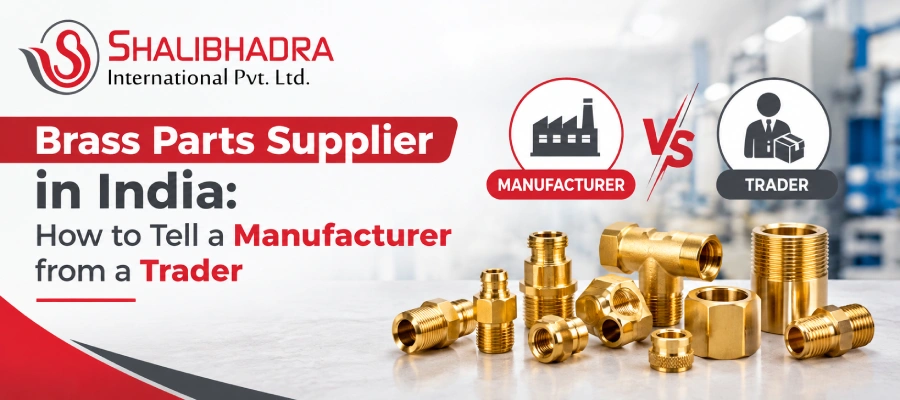
The simplest way to tell a manufacturer from a trader is to ask for a live video walk-through of the machines producing your part. A genuine brass parts supplier in India will show lathes, tooling and inspection benches without delay. A trader will redirect you to photographs, a catalogue or a third-party facility.
Manufacturer, Trader and Job Worker: Three Different Businesses
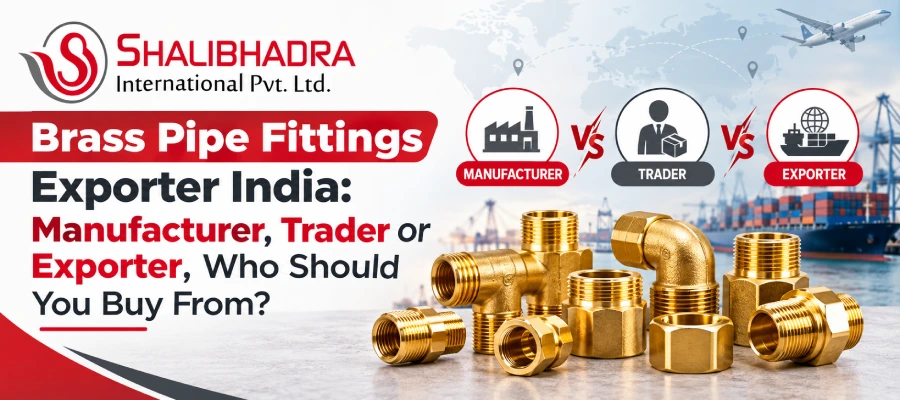
A manufacturer owns the machines, employs the operators and takes responsibility for every step from brass rod to finished component. A trader owns none of that. Traders buy finished parts from several workshops and resell them, adding a margin that commonly sits between 8 and 20 percent depending on volume and complexity.
A third category confuses things further. Job workers are small units that own a few machines and take on specific operations such as threading, knurling or drilling for larger firms. Many Jamnagar factories outsource some processes to them during busy periods, which is normal practice, provided the factory controls final inspection.
Most websites use the words “supplier,” “manufacturer” and “exporter” as if they were synonyms. They are not. A brass parts manufacturer in India may export directly, a trader may export under its own name, and both will describe themselves as a supplier.
Why Jamnagar Is Where Buyers Start
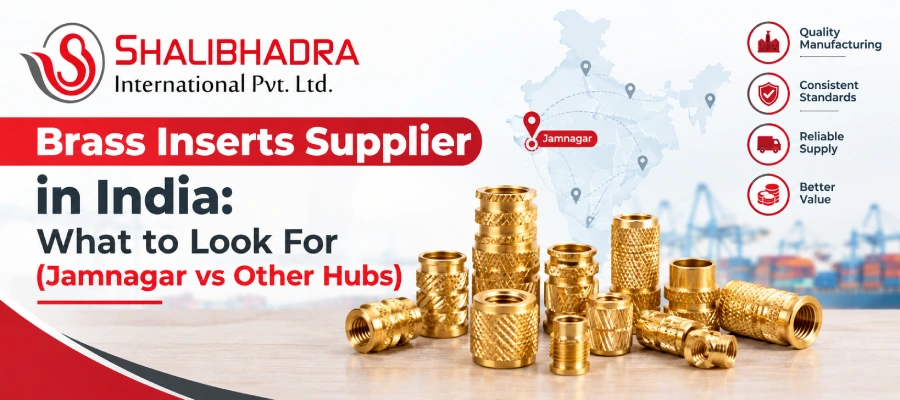
Jamnagar is the first city most buyers search when they need precision brass components. The city in Gujarat’s Saurashtra region is often called the brass parts capital of India, and industry associations describe a cluster of several thousand units producing turned parts, fittings, forgings and electrical components.
That density creates the very problem this article addresses. With so many workshops in one place, a large number of trading firms have set up alongside them, and each one can claim to be a brass parts manufacturer in Jamnagar without owning a single machine.
The cluster still offers real advantages when you deal with the right party. Rod suppliers, plating shops, tool makers and packing units operate within a few kilometres of each other, which shortens sampling cycles. Kandla and Mundra ports are roughly 300 km away by road, keeping inland freight short for export orders.
How Can You Tell If a Brass Parts Supplier in Jamnagar Is a Real Factory?
A real factory leaves evidence everywhere, and most of it can be checked in an afternoon. Start with the address. Search it on a map, ask for a street-level video, and compare it with the address on the GST registration, which is public on the government portal.
Next, ask technical questions that only a person running the machines would answer well. Which machine will make this part, and what is the cycle time? Which brass grade do you recommend for this thread, and why? A manufacturer answers in specifics, such as CNC or automatic lathe, 12 seconds per piece, CW614N rod. A trader answers in generalities.
The table below summarises six checks that separate the two quickly.
| Check | Manufacturer | Trader |
| Live video of your part being made | Available same week | Delayed or declined |
| Cycle time and machine type | Quoted precisely | Vague or “will confirm” |
| Tooling ownership | Clear, documented | Held by unnamed vendor |
| Inspection equipment on site | Gauges, projector, CMM | Reports forwarded from vendors |
| Change request turnaround | Hours to days | Days to weeks |
| Material certificates by heat number | Own records | Supplier’s records |
What Are the Real Advantages of Buying from a Manufacturer?
Buying from the factory gives you control over the variables that cause rejections: alloy, tolerance and process. When a brass parts manufacturer in India makes your part, the engineer who quotes the job is usually the same person who adjusts the tool when dimensions drift. That shortens feedback loops from weeks to hours.
Cost transparency improves too. A factory builds its quote from rod weight, machining time and tooling amortisation, so you can discuss each element. A trader quotes a single number that already contains its own margin and the margin of the workshop behind it.
Traceability matters most for regulated products. If your parts go into water-contact products, electrical safety devices or automotive assemblies, you need batch records linking each lot to a heat number and an inspection report. Factories keep those records because they generate them. Traders can only pass along what they receive.
When Does a Trader Make Sense?
A trader can be the right choice, and pretending otherwise would be unfair. Buyers who need small quantities of many different parts, such as a few hundred pieces each of fifteen items, often struggle to find a factory willing to run short batches. A trader pools orders from several buyers and fills that gap.
Traders also help first-time importers who want a single point of contact, one invoice and bundled shipping. The risk is inconsistency, since the trader may change workshops between orders to chase a lower price. Ask directly which factories supply your parts and whether they will be fixed for repeat orders.
Honest traders say what they are. The red flag is a company that presents itself as a factory but deflects every request to see one.
Documents That Separate Serious Suppliers from Average Ones
Paperwork alone will not prove a company is a factory, but missing paperwork usually proves it is not a serious one. Ask for the GST certificate, the Importer-Exporter Code issued by the Directorate General of Foreign Trade, and a Udyam registration, which lists the unit’s registered manufacturing activity.
Quality documents come next. ISO 9001 certification is the baseline, and IATF 16949 indicates experience with automotive customers. Material test certificates should identify the alloy grade, such as CW614N (CuZn39Pb3) for free-cutting brass, and the lead content, which matters for RoHS compliance in European markets.
Finally, order a paid sample before committing volume. Measure it against your drawing, test the thread with go/no-go gauges and send one piece to a lab for composition analysis. The result tells you more than any certificate.
Frequently Asked Questions
Ask for a live video of your part in production and a breakdown of cycle time and tooling. Traders typically delay, redirect or answer in general terms. Matching the GST address with an actual factory location also helps.
Usually, for repeat orders in decent volume, because you avoid the middle margin. For small mixed lots, a trader may cost less overall since factories often set higher minimums per item.
Yes, and many Jamnagar factories export directly to Europe, the Middle East and North America. Ask for references from overseas customers and sample export documents.
Standard parts often ship in two to three weeks after order confirmation. Custom designs need tooling and sample approval first, which can add three to four weeks.
For large or recurring orders, a visit is worth the cost. If travel is impractical, hire a third-party inspection agency for a one-day audit, which costs far less than a rejected shipment.
Pick three suppliers from your shortlist and send each the same drawing, alloy specification and a request for a live video of the part being machined. The speed, detail and confidence of each reply will sort them into factories and intermediaries faster than any directory listing.
The best brass parts supplier in India for your project is the one that lets you watch the work, read the records and question the process without friction. Once a sample lot confirms that, the order itself becomes the easy part.